:.
:.

This week we have a special post on Gaming Conceptz. Jesper Juul, the video game theorist, gave this blog a special interview. I had the honor of meeting the author last year at the F.R.O.G (Future and Reality of Gaming) Conference. Enjoy the content! Thank you so much Mr. Juul. May the force be with you. =)

Bio: Jesper Juul is a video game theorist and associate professor at the Royal Danish Academy of Fine Arts - The School of Design, and a visiting associate professor at Comparative Media Studies/Writing at MIT. He has been working with video game theory since the early 1990s, at the IT University of Copenhagen, MIT, and at New York University. His previous books are the video game theory classic Half-Real and A Casual Revolution. He recently published The Art of Failure, a book that combines personal confessions about failure with philosophy, game design analysis, psychology and fiction theory.
1) In your last book 'The Art of Failure' you talk about 'the pain of playing video games' in a very interesting way. What was your primary inspiration source to write about this subject?
Two things: 1) That our interaction with video games is clearly filled with frustration and unhappiness, yet we tend to talk about video games in purely positive terms - good, great, awesome, deep etc.. Why are we not talking about this darker side of game playing, and why do we play games even though it is there? 2) My personal experience as a very sore loser of all types of games. Losing makes me very frustrated, yet why is losing so important to me?
2) 'The Art of Failure' is about video games. Can we use the same ideas for board games and card games?
I used mostly video games as examples, but most of the discussion applies to all games. Video games then add some particular twists, especially in terms of single-player games, where the designer can closely follow the progress of the player and tweak the difficult and failure rates to match the player's current skill level.
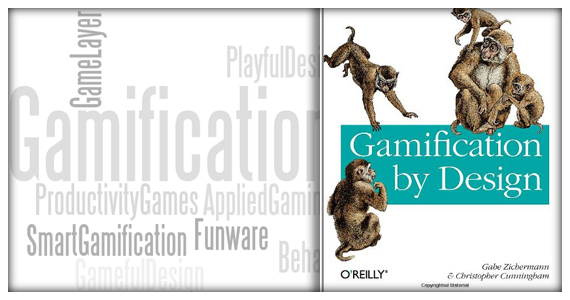
3) In your keynote at F.R.O.G. 2013, you talked a little bit about "Gamification". This buzzword became very popular recently. What do you think about this buzzword? Do you think it's a good concept to define the use of game elements in non-game activities? Do you think it's correct to use 'game thinking' instead?
Like most buzzwords, gamification is overused, overhyped etc.. We could try to introduce a different term, but I think we should rather try to live with "gamification" and then explain what its problems are, what the advantages are etc.. I.e. the important thing is not the word itself, but what we use the ideas for, and how we implement them.
Gamification is a good idea in some activities.
It works best for situations where users / students / employees are in need of feedback, and when the gamification system allows the user to exercise sound judgment.
It works very badly in situations where users are meant to be creative, or if they are already deeply, personally committed to doing the best job that they possibly can. In such situations, gamification can become deeply demotivating.
We could call this the paradox of gamification: we associate games with fun and freedom, yet if we implement the wrong kind of gamification system, it becomes 1984, instead, by closely monitoring and punishing everybody who deviates from the path decided by the leaders.
4) The world is going mobile. How do you see the field of mobile gaming for the next years?
For a while, it seemed that traditional games would keep playing on consoles and PCs, and the broader public would be playing on mobile devices. But now this division seems to have almost disappeared. I think we will continue to see more, "deeper" game experiences on mobile devices.
For phones and tablets, the question to me is still whether external controllers will at some point become mainstream.
5) What are you playing at this moment?
My summer playing has mostly been Clash of Clans - there is something deeply compelling about the strategic multiplayer clan experience.
6) Send a final message to the new researchers of the gaming studies field.
There are many, many things that we don't understand about games, players, development and so on. What is the question that you are in a unique position to formulate and then answer?
Bio: Jesper Juul is a video game theorist and associate professor at the Royal Danish Academy of Fine Arts - The School of Design, and a visiting associate professor at Comparative Media Studies/Writing at MIT. He has been working with video game theory since the early 1990s, at the IT University of Copenhagen, MIT, and at New York University. His previous books are the video game theory classic Half-Real and A Casual Revolution. He recently published The Art of Failure, a book that combines personal confessions about failure with philosophy, game design analysis, psychology and fiction theory.
1) In your last book 'The Art of Failure' you talk about 'the pain of playing video games' in a very interesting way. What was your primary inspiration source to write about this subject?
Two things: 1) That our interaction with video games is clearly filled with frustration and unhappiness, yet we tend to talk about video games in purely positive terms - good, great, awesome, deep etc.. Why are we not talking about this darker side of game playing, and why do we play games even though it is there? 2) My personal experience as a very sore loser of all types of games. Losing makes me very frustrated, yet why is losing so important to me?
2) 'The Art of Failure' is about video games. Can we use the same ideas for board games and card games?
I used mostly video games as examples, but most of the discussion applies to all games. Video games then add some particular twists, especially in terms of single-player games, where the designer can closely follow the progress of the player and tweak the difficult and failure rates to match the player's current skill level.
3) In your keynote at F.R.O.G. 2013, you talked a little bit about "Gamification". This buzzword became very popular recently. What do you think about this buzzword? Do you think it's a good concept to define the use of game elements in non-game activities? Do you think it's correct to use 'game thinking' instead?
Like most buzzwords, gamification is overused, overhyped etc.. We could try to introduce a different term, but I think we should rather try to live with "gamification" and then explain what its problems are, what the advantages are etc.. I.e. the important thing is not the word itself, but what we use the ideas for, and how we implement them.
Gamification is a good idea in some activities.
It works best for situations where users / students / employees are in need of feedback, and when the gamification system allows the user to exercise sound judgment.
It works very badly in situations where users are meant to be creative, or if they are already deeply, personally committed to doing the best job that they possibly can. In such situations, gamification can become deeply demotivating.
We could call this the paradox of gamification: we associate games with fun and freedom, yet if we implement the wrong kind of gamification system, it becomes 1984, instead, by closely monitoring and punishing everybody who deviates from the path decided by the leaders.
4) The world is going mobile. How do you see the field of mobile gaming for the next years?
For a while, it seemed that traditional games would keep playing on consoles and PCs, and the broader public would be playing on mobile devices. But now this division seems to have almost disappeared. I think we will continue to see more, "deeper" game experiences on mobile devices.
For phones and tablets, the question to me is still whether external controllers will at some point become mainstream.
5) What are you playing at this moment?
My summer playing has mostly been Clash of Clans - there is something deeply compelling about the strategic multiplayer clan experience.
6) Send a final message to the new researchers of the gaming studies field.
There are many, many things that we don't understand about games, players, development and so on. What is the question that you are in a unique position to formulate and then answer?