A new book for my library

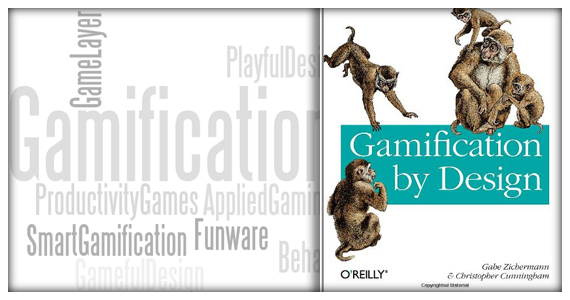
Arrived today another title for my game design shelf. I want to discuss more about gamification and I think this book has a good point of view. Buy here (link).


And below the book description:

"What do Foursquare, Zynga, Nike+, and Groupon have in common? These and many other brands use gamification to deliver a sticky, viral, and engaging experience to their customers. This book provides the design strategy and tactics you need to integrate game mechanics into any kind of consumer-facing website or mobile app. Learn how to use core game concepts, design patterns, and meaningful code samples to a create fun and captivating social environment.

Whether you're an executive, developer, producer, or product specialist, Gamification by Design will show you how game mechanics can help you build customer loyalty
".

Szia!

Ludificator

In this moment I'm writing a book named "LUDIFICATOR". It's a quick reference guide for the newbie game designers. I hope someday this content will be translated to english.

In the third chapter of my book I bring an idea I've discussed in the first post of this blog (link here): the idea of Ludification.

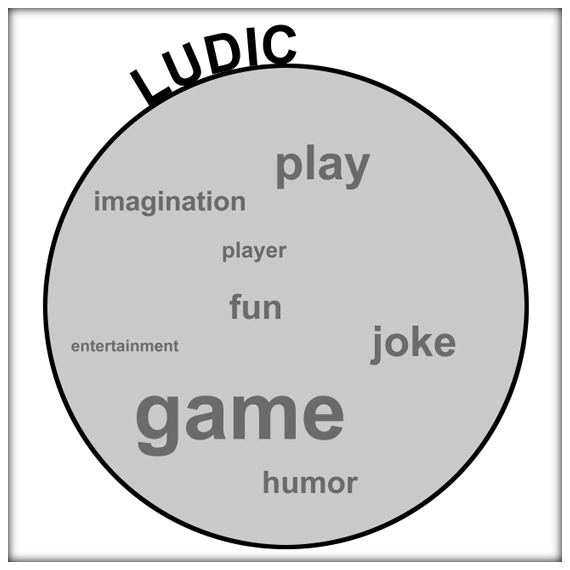
And now I have a good graph to illustrate this concept, as you can see below:

I'm trying to explain that the idea of Lufication is better than Gamification because in my point of view, the Game is inside the Ludic Field.

In my book I tried to demonstrate that it is more adequate to call activities with game mechanics as Ludic Interfaces.

Hang on! The book is coming out soon!

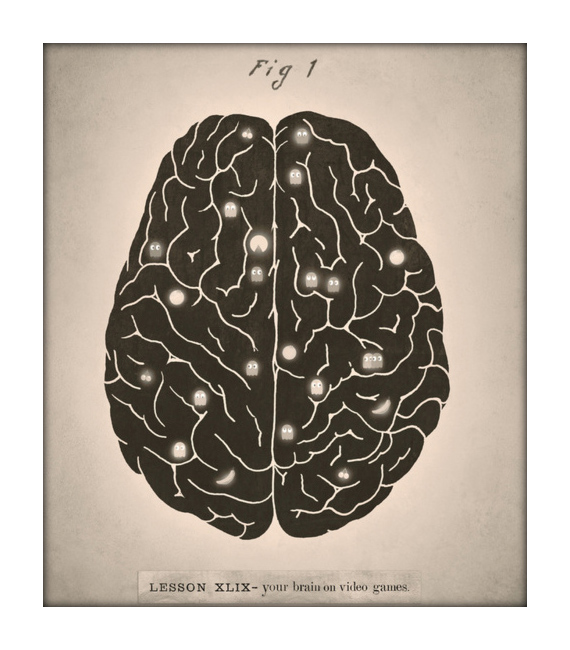
Scientific article: your brain on videogames


Wow! It's the 50th post! ;-)

Think about it

The Art of Video Games 2012

Photo by Blake Patterson

Transmedia Storytelling & Games

I want to delimitate in this short post the concept of transmedia storytelling (JENKINS, 2006): a kind of narrative which develops into multiple mediatic platforms, such as internet, books, video games, comics, television and movies. I want to highlight one specific use of this strategy in the entertainment industry.

I'm going to show to You the strategic appropriation of transmediatic narratives in the industry of entertainment using an established example: the Star Wars fiction series transformed into a Lego board game.

In the movie below it's possible to see how the idea of the movie "The Empire Strikes Back" becomes a board game.


Every game is an unique experience. Every game have a different end. The essence is the same of the movie but players have the opportunity to change the famous battle of Hoth with dice results.

What do you think about that?


Reference:

JENKINS, Henry. Convergence culture: where old and new media collide. NYU Press, 2006.

Games: Tools For Mass Communication

The source is Ogilvy notes: "Art, education, economics, propaganda. Games are arriving at the forefront of media to become an important way to engage entire generations of people. What's different from before? Five billion people are replacing the most common communication device, the simple cell phone, with a full-fledged gaming system in their pocket. There are multiple ways to publish and distribute games over the Internet and to the masses. For many, game creation is becoming a regular activity, as tools become both easier to use and more powerful for people without programming knowledge. This panel will cover unique perspectives on how games are becoming more meaningful forms of expression and a significant tool for communicating ideas".

Click to expand the image below:

Interview with Espen Aarseth

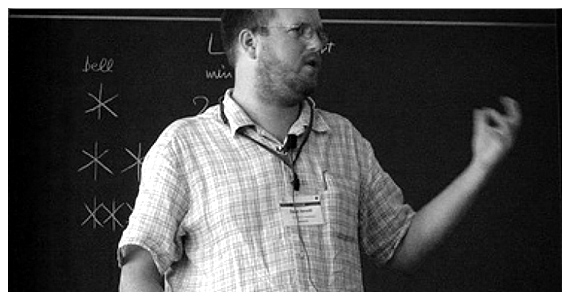
We have something new in this post: the first interview of the blog. An interview with Espen Aarseth (one of my favorite authors).

Espen J. Aarseth is a figure in the fields of video game studies and electronic literature. Aarseth was born in Bergen, Norway, in 1965 and completed his doctorate at the Department of Comparative Literature at the University of Bergen. He co-founded the Department of Humanistic Informatics at the University of Bergen, and worked there until 2003, at which time he was a full professor. He is currently Principal Researcher at the Center for Computer Games Research at the IT University of Copenhagen.

Let's rock!
Vince: There's a lot of definitions for "game". From Huizinga to contemporary authors we can find a lot of ideas about this subject. What's your definition of "game"?
Espen: I am with Wittgenstein on this one; '"game" ("Spiel") is a concept that cannot be formally defined, and when we try to do so, we inevitably end up with merely a definition of a sub genre. I do have a definition of games, but I also acknowledge that this is an overproductive definition, that also includes phenomena such as musical instruments: "Games are facilitators that structure behavior, mainly for the purpose of entertainment." Note that I don't use the word 'rules', but the broader term 'structure'.

Vince: What you think about the buzzword "Gamification"? Do you think it's a good concept to define the use of game elements in non-game activities?
Espen: It is an ideological attempt to make games important and useful; and a very naive view of how humans can be controlled. A scenario where gamification is successful could only be a nightmare. But in 7-8 years it will be forgotten. So do check my prediction in 2020.

Vince: In your book named "Cybertext" You said that "the concept of cybertext focuses on the mechanical organization of the text, by positing the intricacies of the medium as an integral part of the literary exchange". In what kind of game it's possible to see it clearly?
Espen: Mechanics is a crucial aspect in almost all games. Games are obvious, almost trivial examples of what I was talking about there. As I made clear in Cybertext, games are combinations of two layers, the semiotic and the mechanical, and this sets them apart from non-cybernetic media such as novels and films.

Vince: Send a message to the new researchers of the gaming concepts and game design field.
Espen: I believe we are entering a new phase in game research, where we already see glimpses of an academic field with professional standards of quality. We are not quite there yet, but hopefully the early days of sloppy research, terrible quality control and half-baked theorizing will soon be over. Things can only get better!

Vince: Thank you!
Espen: You are welcome!

Twitter

Competition